
Have questions or need our services? Our team is ready to assist you with reliable solutions and prompt support. Contact us today to discuss your requirements.
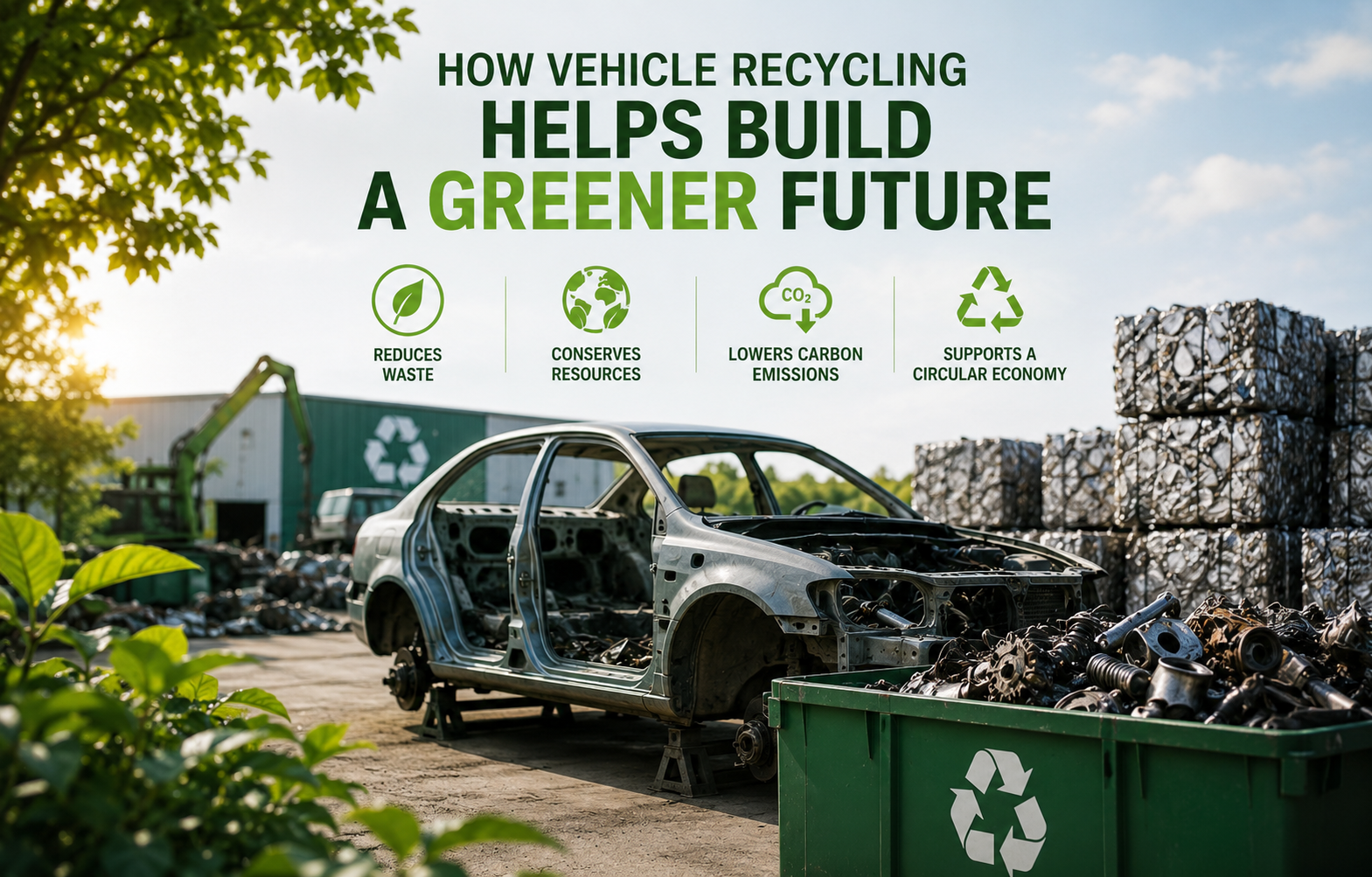
Short answer: Some of the key advantages associated with vehicle recycling are cleaner air and soil, energy savings, recovery of metals and reusable parts, creation of jobs, and proper disposal of harmful fluids. Once an End-of-Life Vehicle (ELV) is brought to the authorized vehicle recycling facility, almost all of its materials are reused rather than buried in a landfill.
Imagine the last ELV that you saw parked on the side of the road and corroding there. No doubt, it looked completely harmless, but under its body, oils, brake fluid, and coolant have been slowly getting into the soil.
Millions of cars become obsolete annually, and thus the issue becomes quite significant. Luckily, the vehicle recycling benefits are no less significant than the danger itself. These benefits will be explained in this guide by Progressive Scrapper.
It is a good idea to begin with some fundamental facts. In any car, there is a great amount of steel, aluminum, copper, rubber, plastic, and glass. About 80 to 90 percent of all these materials can be recovered, reused, or recycled if everything is done right.
This fact alone reveals the essence of the advantages of vehicle recycling. The materials are returned to production processes, hazardous liquids are managed, and usable parts are sent back into circulation. And the result is not one more abandoned car, but raw materials, cheap spare parts, and cleaner streets.
The benefits don't happen by accident. They come from a careful sequence, and each stage plays a part:
Intake and verification. The facility checks the vehicle's ownership and details before any work begins.
Depollution. Engine oil, transmission fluid, brake fluid, coolant, fuel, AC refrigerant, the battery, and airbags are removed first. This protects soil, groundwater, and the workers themselves.
Part recovery. Engines, gearboxes, alternators, starters, doors, mirrors, and electronic modules are inspected, and the usable ones are refurbished.
Vehicle dismantling. Technicians strip the remaining components in a controlled order so materials stay sorted.
Shredding and separation. Industrial shredders break up the shell, magnets pull out the steel, and other equipment separates aluminium and copper.
Scrap metal processing. Recovered metals are cleaned, graded, and sent to mills to become new products.
Skip depollution, and the whole chain loses its value. That's why the order matters so much.
First comes reduced consumption of energy. Manufacturing aluminium out of recyclable scrap may use up to 95 percent less energy than manufacturing it from bauxite ore. Steel from scrap requires much less energy to produce than steel produced from iron ore. Less energy consumed equals lower emissions of carbon, while reduced mining activities cause less destruction of soil and waterways.
Second comes the cleanliness of the soil and groundwater. If the fluids are drained, contained, and disposed of within the framework of the relevant environmental regulations, there is no way for them to seep into the soil. An abandoned car may pollute the area around it for years on end, but not a recycled one.
Finally, there is a matter of the landfills. Each recycled automobile saves tons of metals and other materials from being sent to dumpsites. So do rubber, glass, and plastics, which can be recycled.
All these benefits emerge from one general principle. Recyclability helps maintain the circular economy system where materials go round and round in the cycle instead of going to waste only once. Thus, there is a reduced need for new raw materials and waste generation.
It is not just limited to nature. Jobs come from recycling, including collecting, disassembling, sorting, refurbishing, and metallurgy; many of these are local jobs.
The refurbished parts are yet another positive aspect. The repairs become cheaper for repair garages and car owners since they pay less for refurbished parts compared to purchasing new ones. The older cars continue operating properly and safely for those people who cannot afford to replace them with new ones.
The industry gets its perks too. The manufacturers of recycled metal can save on buying raw material and lessen their dependence on imports and mining. As for the owners, the materials that could be recovered from the vehicle make it valuable rather than scrap.
Air quality in Delhi is an everyday discussion, with old cars playing a significant role. Old engines and faulty emission systems emit much higher levels of pollutants compared to new cars. Removing old cars and recycling them will help us breathe cleaner air.
There are many backyard operations in the city that disassemble old cars without any control over the fluids and waste material generated during the process. This makes selecting from a list of car scrap dealers in Delhi not just about getting the best deal but about much more.
You don't need to be an environmental expert to make a difference. A few habits go a long way:
Don't leave an old vehicle to rot. Abandoned vehicles leak and attract dumping.
Choose an authorized recycling facility and confirm its credentials before handing anything over.
Ask what happens to fluids and batteries. A good facility will explain without hesitation.
Collect the paperwork. Certificates are your proof the vehicle was handled legally.
Keep your RC and ID ready so the process runs smoothly.
Each owner who follows these steps helps spread the vehicle recycling benefits a little further.
At Progressive Scrapper, we provide the services of ELV recycling, vehicle dismantling, and scrap metal processing in the same place. We provide explanations for all processes, deal with hazardous materials in the right manner, and provide you with documentation. The basic purpose behind the services we provide is very straightforward; that is, to ensure the maximum benefits from the vehicle recycling process.
We can be found at Gate No. 1, B4/304, 1st Floor, near Keshav Puram Metro Station, Tri Nagar, New Delhi. You can call 099100 01755 or provide vehicle information through our website.
An older car does not need to be an obstacle. With the proper facility, the car transforms into raw material for a new product, and we all benefit from car recycling.
They include lower pollution, big energy savings, recovered metals and parts, safe disposal of hazardous fluids, new jobs, and reduced landfill waste.
Roughly 80 to 90 percent of a vehicle's materials can be recovered, reused, or recycled, depending on its age and condition.
Yes. An unused vehicle can leak fluids, rust, and take up space, while recycling recovers the materials and disposes of the harmful parts safely.
They're drained, stored, and disposed of according to environmental rules so they don't contaminate soil or groundwater.
We are a trusted vehicle scrapping and recycling company dedicated to safe dismantling, responsible metal recovery, and environmentally sustainable recycling solutions.
Gate No 1, B4/304 1st Floor, near Metro Station Keshav Puram, Tri Nagar, New Delhi, Delhi
Developed by Webquickindia.com
Share your details and your vehicle information. We will contact you with the next steps.